


Vietnam Visitor Checklist 2026: Everything You Need Before You Land
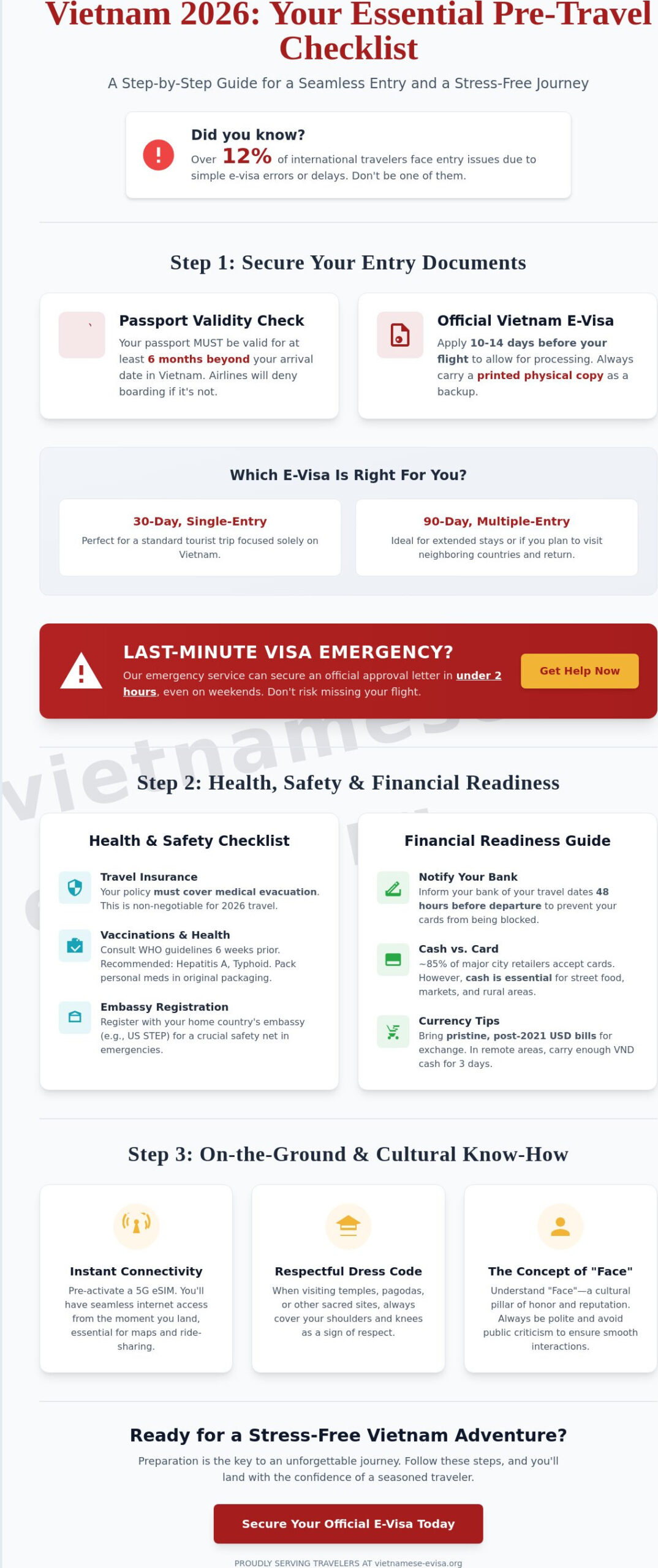
Imagine standing at the Hanoi immigration counter in January 2026, watching other travelers breeze through while you are pulled aside because your paperwork is missing a single digit. It is a high-stakes moment that affected over 12% of international arrivals in recent years, often due to simple e-visa processing delays or minor clerical errors. We know that the pressure of getting everything right can turn an exciting vacation into a source of significant anxiety. Every vietnam visitor deserves to land with the absolute certainty that their documents are flawless and their entry is guaranteed.
You shouldn’t have to worry about border denials or connectivity issues when you should be focused on your itinerary. This guide provides a comprehensive, step-by-step preparation plan to ensure you are fully documentation-ready and culturally prepared for a seamless 2026 journey. We will walk you through the essential electronic visa requirements, local currency secrets, and the transport etiquette you need to navigate the country like a seasoned expert.
Key Takeaways
- Ensure your passport remains valid for at least six months beyond arrival and secure your official Vietnam E-visa early to eliminate bureaucratic delays.
- Every vietnam visitor must prioritize health and financial security by verifying medical evacuation coverage and aligning with current 2026 vaccination protocols.
- Streamline your on-the-ground logistics by pre-activating a 5G eSIM and installing essential local apps to maintain constant connectivity from the moment you land.
- Navigate social interactions with professional ease by mastering the cultural “Face” concept and adhering to respectful dress codes at sacred sites.
Essential Entry Documents and Visa Requirements for 2026
Securing your entry documents is the most critical step for any vietnam visitor planning a trip in 2026. Your passport must be valid for at least 6 months beyond your arrival date. Immigration officers at major hubs like Tan Son Nhat or Noi Bai strictly enforce this 180-day rule. If your document expires sooner, airlines will likely deny boarding at your departure gate. Don’t risk your entire holiday on a clerical oversight; check your expiration date today.
You should secure your Vietnam E-visa or entry permit at least 10 to 14 days before your flight to account for administrative processing. While digital copies are convenient on your phone, always print physical copies of your approval letters. Technical glitches at immigration counters or dead phone batteries can cause significant stress. As Tourism in Vietnam continues to grow, reaching record arrival numbers, having a paper backup ensures you move through the border checkpoints with professional efficiency.
Choosing the Right Visa for Your Visit
Travelers in 2026 have two primary electronic options to consider. The 30-day e-visa works perfectly for single-entry tourist trips. If you plan to explore neighboring countries and return, the 90-day multiple-entry e-visa is the better choice. It provides the flexibility needed for extended stays or regional itineraries. For a detailed breakdown of these options, consult our Vietnam E-visa (30 & 90-day): The Ultimate 2026 Application Guide to select the correct category for your needs.
The Emergency “Safety Net” for Late Applicants
Mistakes happen, and visa approvals can sometimes face unexpected delays. If you reach the airport and realize your permit is missing or contains errors, don’t panic. Our specialized emergency vietnam visa services provide a vital lifeline for travelers in distress. We can often secure an official approval letter in under 2 hours, even during weekends or public holidays. This expedited processing is designed specifically for time-critical situations where every minute counts. Every vietnam visitor should keep our contact details as a professional safeguard against last-minute travel disruptions.
Health, Safety, and Financial Readiness Checklist
Every 2026 vietnam visitor needs a robust plan for medical and monetary contingencies. Don’t wait until you land at Noi Bai or Tan Son Nhat to realize your bank blocked your card. Preparation starts with verifying your travel insurance. You must ensure your policy specifically covers medical evacuation in Southeast Asia. Securing comprehensive travel insurance that includes medical evacuation is a non-negotiable requirement for any vietnam visitor in 2026, as local facilities in rural provinces often lack the specialized equipment found in international hubs.
Notify your financial institution of your exact travel dates at least 48 hours before departure. In Hanoi and Ho Chi Minh City, approximately 85% of major retailers and hotels now accept contactless payments. However, local markets and street food vendors remain cash-heavy. Carry a reserve of “pristine” USD bills dated after 2021. Many exchange booths at the airport or in jewelry shops will reject notes with even minor tears, ink marks, or heavy folding.
Managing Your Travel Finances
Reliable ATMs like Vietcombank, Agribank, and TPBank are widespread in urban centers. Withdrawal fees typically range from 20,000 to 55,000 VND per transaction. While the exchange rate remains managed by the State Bank of Vietnam, check the latest 2026 mid-market rates to ensure you aren’t overcharged at independent kiosks. For those traveling to remote areas like Ha Giang or the Central Highlands, carry enough VND to last three days, as power outages can occasionally take local ATMs offline.
Health and Safety Protocols for Visitors
Consult the 2026 WHO guidelines for Southeast Asia at least six weeks before your flight. Recommended vaccinations for this region typically include Hepatitis A, Typhoid, and Japanese Encephalitis. If you take regular medication, pack a 30-day supply in original packaging with a copy of your prescription. Local pharmacy chains like Pharmacity and Long Chau are reliable for basic needs, but specific western brands may be unavailable.
Registration with your home country’s embassy provides a vital safety net. For example, reviewing the latest Vietnam visa requirements for U.S. citizens gives you direct access to the STEP enrollment program and emergency contact data. If you encounter an administrative crisis or a documentation error upon arrival, our team offers an emergency Vietnam visa service to resolve legal hurdles in under four hours.
On-the-Ground Logistics: Connectivity and Transport
Securing your digital and physical mobility is the first priority after clearing immigration. Every vietnam visitor in 2026 should treat connectivity as a safety requirement rather than a luxury. Modern travelers no longer rely on spotty hotel Wi-Fi; they arrive prepared with local data to manage everything from currency conversion to emergency communication.
Staying Connected in Vietnam
Three major providers dominate the telecommunications landscape: Viettel, Vinaphone, and Mobifone. Viettel is the primary recommendation for most travelers, as it holds approximately 50% of the market share and offers the most robust 5G coverage in rural provinces like Ha Giang or Cao Bang. Vinaphone and Mobifone provide excellent speeds in urban centers like Hanoi and Da Nang, often at slightly lower price points.
- eSIM Technology: By 2026, eSIMs are the standard for convenience. You can activate a data plan 24 hours before your flight to ensure you’re online the moment your wheels touch the tarmac.
- Airport vs. City Centers: While kiosks at Tan Son Nhat (SGN) and Noi Bai (HAN) airports offer quick setups, they often charge a premium. Buying a SIM card at an official brand store in the city center can save you roughly 20% to 30% on the total cost.
Navigating Local Transportation
The transition from the airport to your hotel is where many travelers encounter their first challenge. Unofficial “taxi scouts” frequently target arrivals, quoting prices that are 300% higher than standard rates. To avoid these scams, download the Grab app before you depart. Grab is the region’s leading ride-hailing service, providing transparent pricing, driver identification, and GPS tracking for every trip. It’s the most secure way to move through dense city traffic.
While ride-hailing apps are perfect for urban navigation, those seeking a more luxurious way to cross the country can explore SJourney Luxury Train (Vietnam), which combines high-end rail travel with bespoke tour packages for a truly unique experience.
Safety on the road involves more than just choosing the right car. Review the CDC health recommendations for Vietnam to understand safety protocols for environmental exposure while using open-air transport like cyclos or motorbikes. When you’re ready to cross the street in motorbike-heavy areas, maintain a slow, steady pace. Drivers will predict your movement and flow around you; sudden stops or lunges are what cause accidents.
For a deeper look at managing your entry and stay, consult our Vietnam e-visa 30-90 day application guide for comprehensive logistics. Don’t leave your entry to chance.
Expert Tip: Always verify your driver’s license plate against the app before entering any vehicle. If you haven’t secured your entry documents yet, start your official evisa application today to ensure a smooth arrival.
Cultural Etiquette and 2026 Seasonal Planning
Respecting local customs ensures a smooth journey for every vietnam visitor. When you enter temples, pagodas, or government offices, you must cover your shoulders and knees. This isn’t just a suggestion; it’s a mark of respect for Vietnamese spiritual traditions. You should also understand the concept of “Face.” Avoid raising your voice or criticizing people in public. Vietnamese culture values harmony, so staying calm during negotiations or misunderstandings will yield better results than aggression. Always use both hands when giving or receiving items, especially business cards or money, to show politeness.
The 2026 Tet Festival Survival Guide
Tet 2026 falls on February 17. This is the most significant holiday in Vietnam, and it drastically impacts travel logistics. Most businesses, including small shops and local restaurants, close for at least five to seven days. Transportation like trains and domestic flights often sell out 60 days in advance. If you find yourself without proper documentation during this peak period, you’ll need an Urgent Vietnam Visa to avoid being stranded. Government offices shut down completely during the lunar New Year, so securing your entry papers at least three weeks before February is mandatory to avoid holiday-related delays.
Social Norms and Packing Essentials
Packing depends entirely on your itinerary because of the country’s unique geography. Northern Vietnam, including Hanoi, experiences a damp winter from December to February with temperatures dropping to 10°C (50°F). You’ll need a jacket and layers. Conversely, Ho Chi Minh City remains hot and humid year-round, often exceeding 30°C (86°F). Lightweight, breathable cotton is your best choice for the South.
Tipping isn’t a strict requirement in local street food stalls, but leaving 10 percent in high-end restaurants or 50,000 VND for tour guides is common practice in 2026. You’ll find that locals appreciate the effort when you use basic phrases. Try these daily:
- Xin chao (Sin chow) – Hello
- Cam on (Gahm un) – Thank you
- Bao nhieu? (Bow nyew) – How much?
- Khong, cam on (Khong gahm un) – No, thank you
Most 2026 travelers find that a mix of modesty and preparation makes their trip far more enjoyable. Don’t forget a universal power adapter (Type A, C, or F) and a reusable water bottle with a built-in filter to stay hydrated while reducing plastic waste.
Secure Your 2026 Vietnam Journey Today
Your 2026 trip to Vietnam is within reach once you’ve checked off the essentials. Proper preparation means having your travel documents ready, securing a local SIM card for instant connectivity, and understanding the seasonal weather patterns that define the region. Every vietnam visitor needs a solid plan to navigate the 2026 entry requirements smoothly. Don’t let bureaucratic hurdles delay your arrival. We offer over 15 years of experience in Vietnam immigration to ensure your application is handled with precision. Our secure processing system maintains a 99.8% approval rate, giving you peace of mind before you even pack your bags. If you hit a snag, our expert support team is available 24/7 to handle urgent requests or last minute changes. Whether you’re planning for the Lunar New Year festivities or a quiet coastal retreat, having your paperwork in order is the first step to success. Start your journey on the right foot by handling the most critical step now. Vietnam is waiting for you.
Apply for your Vietnam E-visa now to ensure a stress-free 2026 trip
Frequently Asked Questions
Do I need a visa to visit Vietnam in 2026?
Yes, most travelers require a valid visa to enter the country, although citizens from 25 specific nations currently benefit from visa exemptions lasting between 15 and 45 days. You must verify your country’s specific status before finalizing travel plans. The electronic visa serves as the primary legal basic for most international arrivals. Secure your documentation through our professional portal to ensure compliance with the latest 2026 immigration protocols.
How long does it take for a Vietnam visitor to get an e-visa?
A standard vietnam visitor should expect a processing time of 3 to 5 working days for a traditional electronic visa. If you’re facing a tight deadline, our emergency service can deliver results in under 4 hours. We provide 24/7 support to manage urgent requests and ensure your private approval letter is ready for boarding. Don’t leave your travel plans to chance; start your application today for guaranteed peace of mind.
What happens if a Vietnam visitor stays past their visa expiry?
Overstaying your visa leads to immediate financial penalties starting at 500,000 VND per day and can result in future entry bans. A vietnam visitor who exceeds their stay by more than 15 days risks deportation and mandatory blacklisting by the Immigration Department. Our expert team handles urgent extensions to prevent these administrative crises. Contact our 24/7 support line immediately if you need to regularize your status before reaching the airport.
Can I get a visa on arrival at the airport in Vietnam?
You can only utilize the visa on arrival facility if you hold a pre-approved private approval letter before you land. This option is restricted to 8 international airports, including major hubs like Da Nang and Cam Ranh. Airlines won’t let you board without seeing either this letter or a completed electronic visa. Use our trusted platform to obtain the correct documentation and avoid being turned away at the check-in counter.
Is Vietnam safe for solo visitors in 2026?
Vietnam remains one of the safest destinations in Southeast Asia, currently ranking 41st on the Global Peace Index. Solo travelers experience very low rates of violent crime, though it’s smart to watch for petty pickpocketing in busy markets. Our service acts as your professional facilitator, providing a secure way to manage your legal entry. We offer constant vigilance through our support channels so you’re never truly alone during your journey.
What is the best month for a first-time Vietnam visitor?
March is the most reliable month for a first trip because it provides dry weather in the north, center, and south simultaneously. You’ll enjoy mild temperatures averaging 20°C in Hanoi and 28°C in the southern coastal regions. This period avoids the peak humidity and monsoon rains that typically start in late May. Since this is a popular time, ensure your vietnam e-visa application is processed early to avoid the seasonal rush at immigration checkpoints.