


Vietnamese New Year: Everything You Need to Know
Imagine landing in Hanoi only to realize your visa approval is stuck behind a closed government door for the next nine days. For many travelers, the vibrant beauty of the vietnamese new year is often overshadowed by the sudden, total shutdown of administrative services. You likely already know that Tet is the most important celebration in Vietnam, but the reality of a country essentially pausing for over a week can be daunting if you aren’t prepared. It’s a time of immense joy and cultural richness, yet it presents the most significant logistical challenge of the travel year.
We’re here to ensure your journey into the Year of the Horse is seamless and stress-free. This guide provides the definitive schedule for Tet 2026, including the official public holiday dates from February 14 to February 22. You’ll discover a strategic timeline to secure your entry documents before government offices close their doors. We’ll also walk you through the essential traditions, regional food specialties, and travel tips you need to navigate this high-demand season with total confidence.
Key Takeaways
- Pinpoint the critical dates for the 2026 vietnamese new year, which officially begins on February 17, to align your itinerary with the nine-day public holiday shutdown.
- Explore the symbolic meaning behind the ‘Five-Fruit Tray’ and red envelopes to participate authentically in local celebrations.
- Prepare for the ‘Great Migration’ by securing transport and dining options before regional services and government offices close for the festival.
- Master a ‘pre-shutdown’ visa strategy to ensure your entry documents are processed before the mandatory administrative closure in early February.
- Adjust your travel budget for ‘Tet prices’ to account for the standard 20-30% increase in food and transport costs during this peak period.
Understanding Tet 2026: The Spirit of the Vietnamese New Year
Tet Nguyen Dan, commonly known as the vietnamese new year, translates literally to the “Feast of the First Morning.” It’s the most vital festival in the country’s cultural calendar, representing a period of renewal, family reunions, and hope for prosperity. While the official public holiday for 2026 lasts nine days, the spirit of the celebration permeates daily life for nearly a month. You’ll notice the atmosphere shifting weeks in advance as families begin deep-cleaning homes and bustling markets overflow with peach blossoms and kumquat trees. It’s a time when the entire nation pauses to reset, making it both a beautiful and logistically complex time to visit.
When is Tet 2026? Key Dates to Remember
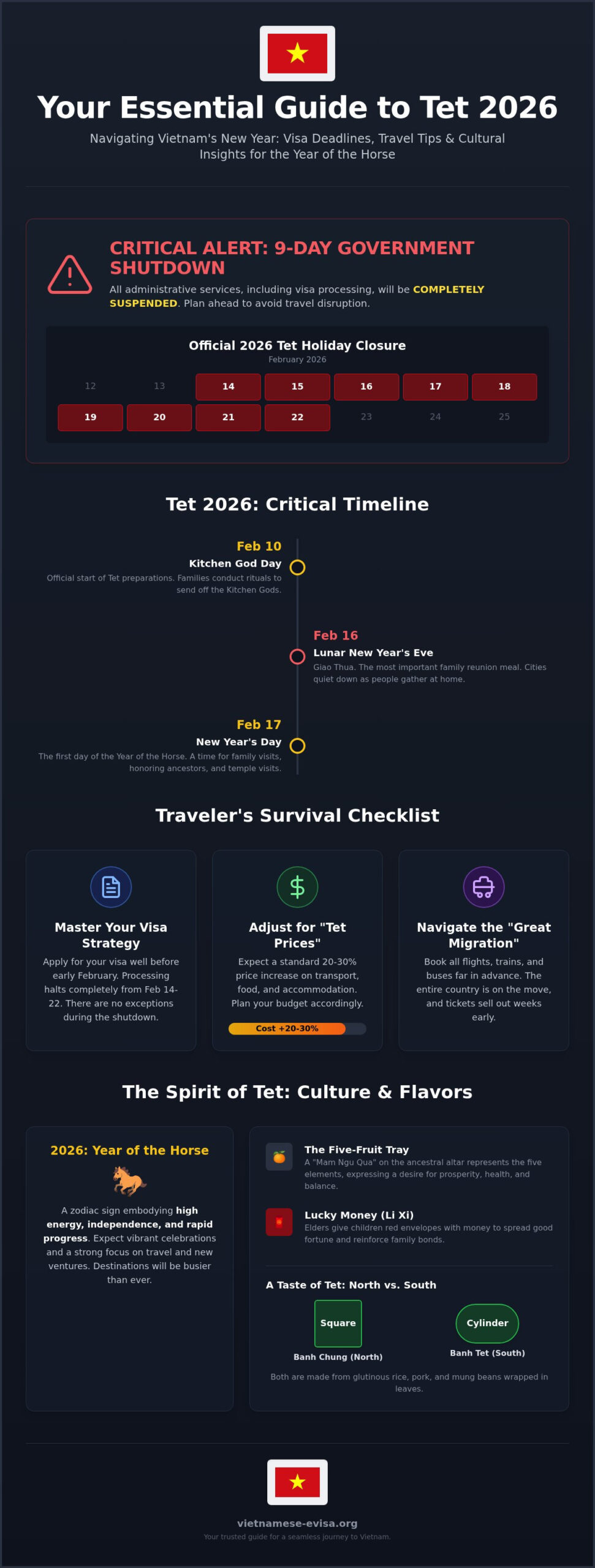
The timing of the vietnamese new year changes annually based on the lunar calendar. For 2026, the first day of the New Year falls on Tuesday, February 17. However, your travel planning must account for the entire holiday window. The official government shutdown for 2026 is scheduled from Saturday, February 14, through Sunday, February 22. During this period, standard visa processing and administrative services will be completely suspended.
- February 10, 2026 (Kitchen God Day): This marks the official start of preparations. Families offer sacrifices to the deities who report to the Jade Emperor, and you’ll see people releasing golden carp into lakes and rivers.
- February 16, 2026 (Lunar New Year’s Eve): Known as Giao Thua, this is the peak of family reunions. Expect cities to go quiet by late afternoon as people gather for the most important meal of the year.
- February 17-19, 2026: These are the first three days of the New Year. Rituals are strictly followed to ensure good luck, such as visiting relatives, honoring ancestors, and visiting local temples.
The Significance of the Year of the Horse
2026 marks the Year of the Horse, a zodiac sign that embodies high energy, independence, and rapid progress. In Vietnamese culture, the Horse is revered for its active nature and tireless work ethic. You should expect the 2026 celebrations to be particularly vibrant and travel-focused, as the Horse sign represents movement and exploration. This energetic spirit means popular destinations will be busier than usual, so securing your entry documents well before the February shutdown is essential.
If you’re visiting during this time, keep an eye out for specific decorations. You’ll see horse motifs integrated into traditional displays, often paired with vibrant red and gold colors to symbolize wealth and success. Because the Horse is associated with speed and action, many locals view 2026 as a year to pursue new ventures. This translates to an even higher demand for domestic travel, so booking your logistics early is the only way to ensure you aren’t left behind during the horse’s fast-paced year.
Tet Traditions: Flavors, Flowers, and Regional Vibes
The vietnamese new year is defined by a deep sensory experience. Every home transforms into a sanctuary of color and fragrance. Central to this transformation is the “Five-Fruit Tray” (Mam Ngu Qua), which sits prominently on the ancestral altar. These five fruits represent the five basic elements of oriental philosophy: metal, wood, water, fire, and earth. By displaying these, families express their collective desire for prosperity, health, and peace in the coming year. It’s a visual contract with the future, ensuring all aspects of life are balanced.
Social interactions during this period are anchored by “Lucky Money” or Li Xi. These small red envelopes are exchanged to spread good fortune, primarily given by elders to children or by adults to their parents. It’s a gesture that reinforces social hierarchies and familial bonds through the sharing of wealth. If you’re invited into a home, expect the air to be thick with the scent of burning incense. Ancestral worship is the heartbeat of the holiday; it’s the moment when the living invite their forebears to join the festivities, bridging the gap between generations.
While these traditions are welcoming, remember that regional travel becomes highly competitive during this peak season. If you haven’t secured your emergency vietnam visa yet, do so before the administrative shutdown to avoid missing these cultural highlights.
A Taste of Tet: Essential Holiday Foods
Food is the ultimate language of the vietnamese new year. Banh Chung is the quintessential Tet dish made from glutinous rice, pork, and mung beans wrapped in dong leaves. While Northern families favor the square shape of Banh Chung, Southerners prefer the cylindrical Banh Tet. You’ll also encounter Gio Lua, a lean pork sausage, and Mut Tet, which are colorful candied fruits. These snacks are always served alongside hot tea to welcome any guest who drops by to offer New Year wishes.
Regional Differences: Hanoi vs. Ho Chi Minh City
The experience of Tet varies significantly depending on your geographic location. In Hanoi, the weather is often misty and cold, which emphasizes the traditional, ancient rituals and family heritage. The city is decorated with pink Peach blossoms (Hoa Dao), which thrive in the Northern chill. Conversely, Ho Chi Minh City is vibrant and sunny, filled with bright yellow Apricot blossoms (Hoa Mai). The atmosphere in the South is more outgoing, featuring massive flower festivals and public performances. In Central Vietnam, cities like Hue blend these styles with a unique touch of royal court traditions and coastal flair.
The Traveler’s Reality: Logistics and Holiday Closures
While the cultural beauty of the vietnamese new year is undeniable, the logistical reality for travelers is intense. The “Great Migration” describes the period when millions of Vietnamese residents return to their ancestral hometowns. This mass movement creates a bottleneck for all forms of transit. Domestic flights, trains, and sleeper buses are often booked solid months in advance. If you’re planning to move between cities during the peak week of Tet 2026, you cannot rely on last-minute availability.
Once the holiday begins, you’ll witness the “Ghost Town” effect. Major hubs like Hanoi and Ho Chi Minh City, usually teeming with life, become eerily quiet. Most local restaurants, museums, and family-owned shops close for at least the first three days of the festival. You should also prepare for a holiday surcharge. Many businesses that remain open apply a 20-30% increase to their standard rates to cover seasonal labor costs. It’s a standard practice that applies to everything from a bowl of Pho to private car hires.
Government Closures: The Visa Warning
The most critical risk for international visitors is the total shutdown of government services. The Vietnam Immigration Department and all overseas Embassies close for the duration of the official public holiday. For 2026, this means no standard visa processing will occur from February 14 through February 22. If your e-visa status is “pending” when the offices close, it will remain frozen until they reopen on February 23. Arriving at the border without an approved document during this window will result in immediate entry denial.
Don’t leave your entry to chance. If you’ve missed the standard window, you must secure an expedited vietnam visa before the holiday begins to ensure your travel plans stay on track.
Navigating Transportation and Accommodation
To survive the Tet 2026 travel rush, book your North-South transport at least three months in advance. Local ride-hailing apps like Grab will continue to operate, but expect significantly fewer drivers and aggressive surge pricing. If you prefer a more active atmosphere during the shutdown, target tourist-centric hubs. Places like Hoi An and Phu Quoc are known to keep more services running for international guests compared to the quiet residential districts of the big cities. Regardless of your destination, confirm your hotel bookings twice to ensure they are staffed and ready for your arrival.
Planning Your Tet 2026 Trip: Visa Deadlines and Survival Tips
To experience the vietnamese new year without unnecessary stress, your preparation must begin at least two weeks before the official holiday. Because government offices will suspend operations starting February 14, 2026, you should submit your visa application no later than February 1. Waiting until the final week is a high-risk strategy; any administrative delay could leave you without an approved document when the doors lock for the nine-day break. Beyond paperwork, remember to adjust your financial expectations. You’ll need to budget an extra 20-30% for daily expenses, as the “holiday surcharge” is a standard reality for food and transportation during this peak week.
Integration into the local atmosphere is simple if you learn a few basic customs. Greeting locals with “Chuc Mung Nam Moi” (Happy New Year) is an effective way to build rapport. While many shops close, your respectful interaction with those who remain open will define your experience. If you find yourself in a situation where your travel dates are approaching and you don’t have an approved entry document, don’t panic. There are specialized pathways designed to handle these exact time-critical scenarios.
Securing an Urgent Vietnam Visa for Tet
If you missed the standard application window or realized too late that the embassy is closed, our emergency vietnam visa service acts as your primary safety net. Even when the official government portal appears inactive, specialized agencies utilize proprietary channels to facilitate approvals for travelers in crisis. You can review the full vietnam visa fee structure to understand the costs associated with these expedited services, ensuring you aren’t left stranded during the vietnamese new year shutdown.
Tet 2026 Survival Checklist
- Cash is King: Withdraw a sufficient amount of Vietnamese Dong (VND) before February 14. ATMs in major cities frequently run out of cash or undergo maintenance during the long holiday.
- Verify Documentation: Check your vietnam e-visa status at least 72 hours before your flight. Ensure every detail matches your passport exactly to avoid boarding denials.
- Pack a First Day Kit: On February 17, the first day of the New Year, almost everything will be closed. Pack essential snacks, medications, and toiletries to last at least 48 hours.
Preparation is the difference between a cultural adventure and a logistical nightmare. Don’t let a closed embassy ruin your trip; apply for your visa today to beat the Tet rush and secure your entry before the 2026 shutdown begins.
Prepare for a Seamless Tet 2026 Journey
The vietnamese new year offers a cultural experience unlike any other, provided you’ve managed the significant logistical hurdles. Remember that the nine-day government shutdown starting February 14, 2026, is absolute. Standard visa processing won’t resume until the holiday concludes. By securing your transportation early and preparing for the quiet atmosphere in major cities, you’ll be able to focus on the vibrant traditions and unique flavors that make the Year of the Horse so special.
If you find yourself facing a last-minute documentation crisis, don’t let bureaucratic closures derail your plans. We offer over 15 years of immigration expertise and provide 24/7 support even during the peak holiday period. Same-day processing is available to ensure you aren’t left behind. Secure Your Urgent Vietnam Visa for Tet 2026 today and travel with the confidence that your entry is guaranteed. Vietnam is ready to welcome you into its most sacred celebration with open arms.
Frequently Asked Questions
When is the Vietnamese New Year (Tet) in 2026?
The first day of the vietnamese new year in 2026 falls on Tuesday, February 17, marking the start of the Year of the Horse. The official public holiday period for government offices and most businesses is scheduled for nine consecutive days. This shutdown begins on Saturday, February 14, and continues through Sunday, February 22, so you should finalize all administrative tasks before this window opens.
Can I still get a Vietnam visa during the Tet holiday?
Standard government visa processing stops completely during the holiday, but you can still secure an expedited or rush visa through specialized private agencies. While the official Immigration Department portal is inactive, our 24/7 support remains available to handle time-critical requests. It’s essential to use a professional service if you discover your documentation is missing after the February 14 closure begins.
Is it a good idea to visit Vietnam during Tet?
Visiting during Tet is excellent for cultural immersion but presents significant logistical challenges. You’ll witness unique traditions and festive decorations, but you must accept that many shops, museums, and local restaurants will close for several days. If you prefer a fast-paced trip with full service availability, consider traveling just before or after the peak holiday week to avoid the “Ghost Town” effect.
What should I do if my Vietnam e-visa is still pending when the holiday starts?
If your application is still pending when the vietnamese new year public holiday begins on February 14, it will not move until offices reopen on February 23. You cannot board your flight with a pending status. In this situation, you must apply for an emergency or same-day visa through a private service to bypass the standard government processing freeze and secure your entry.
Are the airports in Vietnam open during the New Year?
International airports in Vietnam remain fully operational 24/7 throughout the entire Tet period. While government administrative offices close, immigration officers at the border continue to process arrivals and departures as usual. However, you should expect longer queues and significantly higher ground transportation costs because there are fewer drivers available to provide taxi or ride-hailing services during the festive week.
Do I need to book my hotels in advance for Tet 2026?
You must book your accommodation at least two to three months in advance to secure reasonable rates and guaranteed availability. Many popular hotels in tourist hubs like Hoi An and Phu Quoc reach full capacity during the New Year. Additionally, confirm that your chosen hotel will have staff available to provide essential services, as some smaller boutique stays may operate with limited personnel during the holiday.